[ENVIRONMENTAL DESIGN]
Practice Personal Pronouns
A six-poster series about personal pronouns, funded by a research grant at Utah State University.
- Ryker created “Practice Personal Pronouns,” a six-poster series that teaches people about personal pronouns and how to talk about them respectfully with gender-queer people.
- The project was funded by an Undergraduate Research and Creative Opportunity (URCO) grant from the Office of Research at Utah State University.
- The series walks through what pronouns are, why they matter, how to learn someone's pronouns, how to handle mistakes, how to take initiative and how to help normalize them.
- Bright colors, playful illustrations and QR codes to learning videos make a heavy topic approachable.
Summarized by AI from this page. The long version is below.
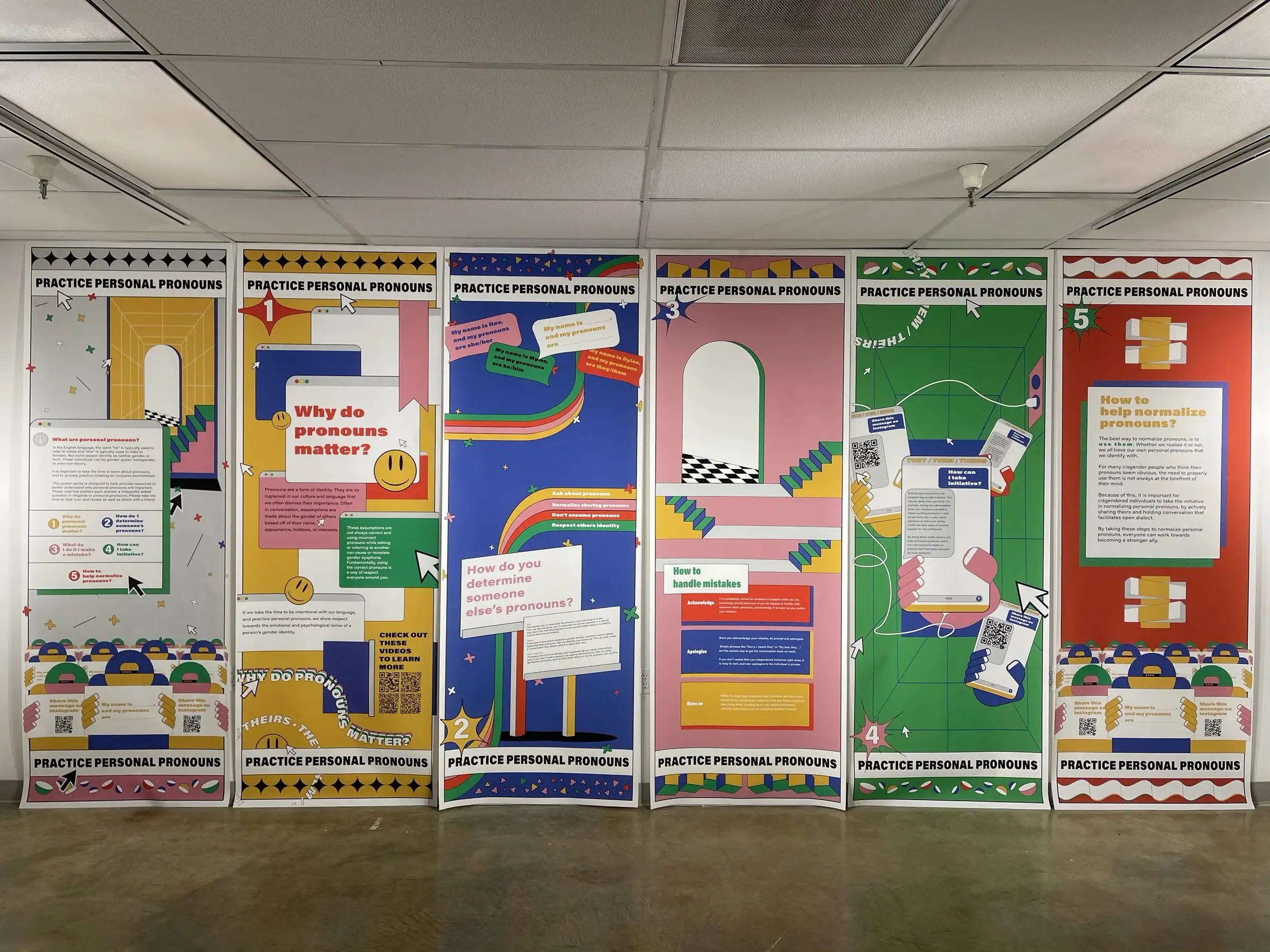
Some design projects sell a product. This one was about helping people have a better conversation.
Thanks to an Undergraduate Research and Creative Opportunity (URCO) grant from the Office of Research at Utah State University, I designed a series of six posters about personal pronouns. The goal was to help people understand pronouns and learn how to talk about them respectfully with gender-queer people.
The series
Each poster takes one question and answers it in plain language:
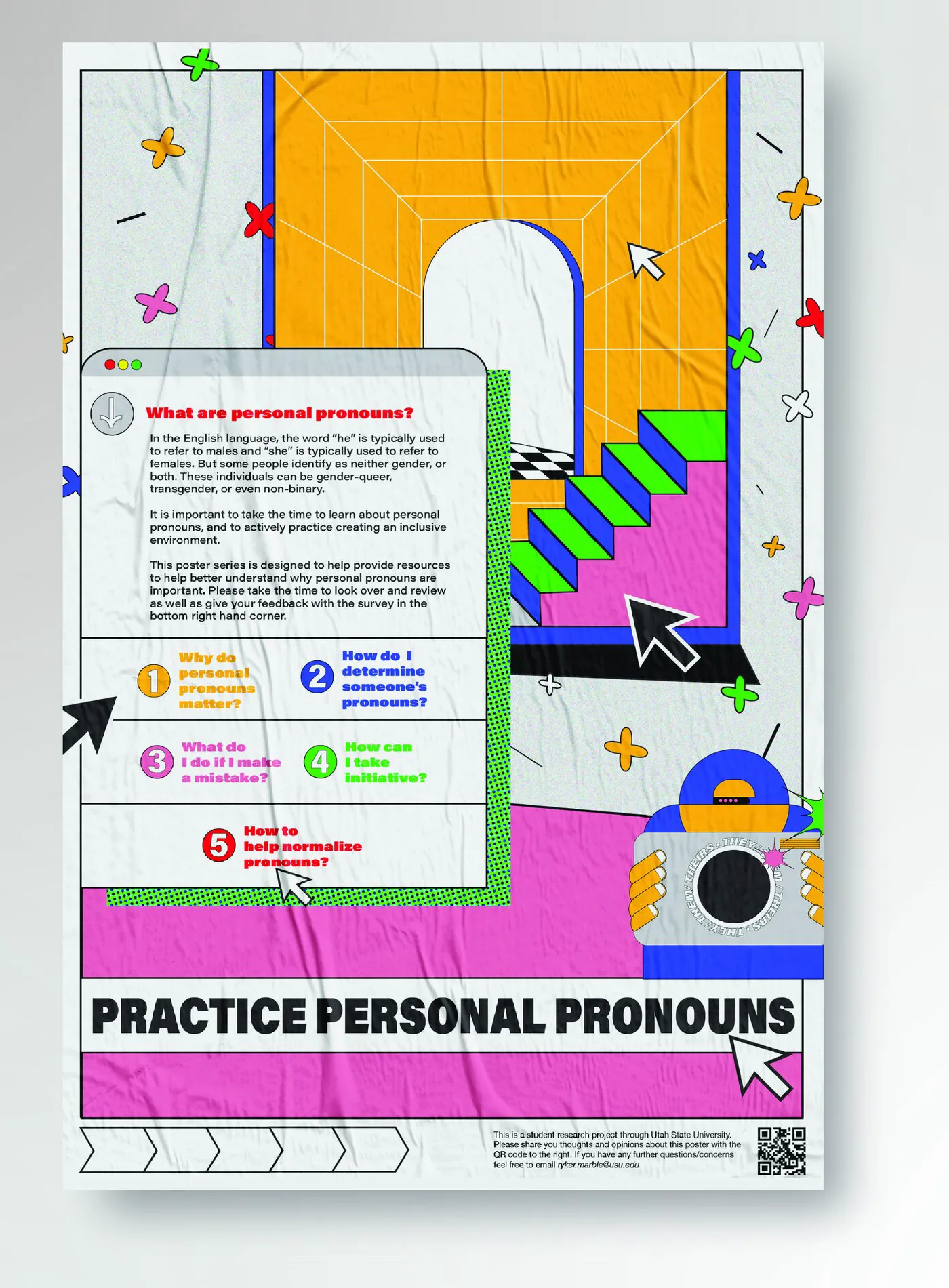
- What are personal pronouns? The introduction, with a map of the five posters that follow.
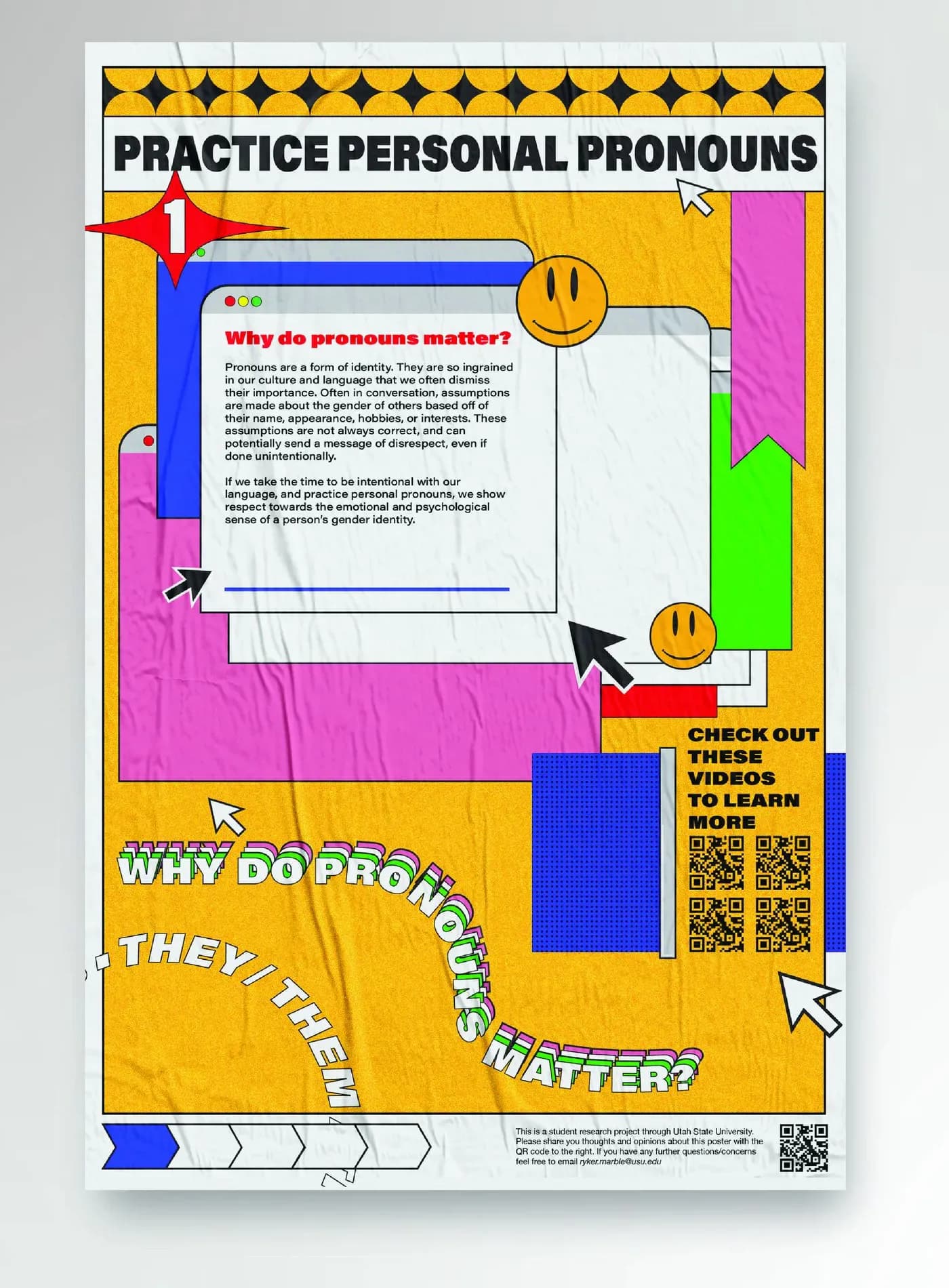
- Why do pronouns matter?
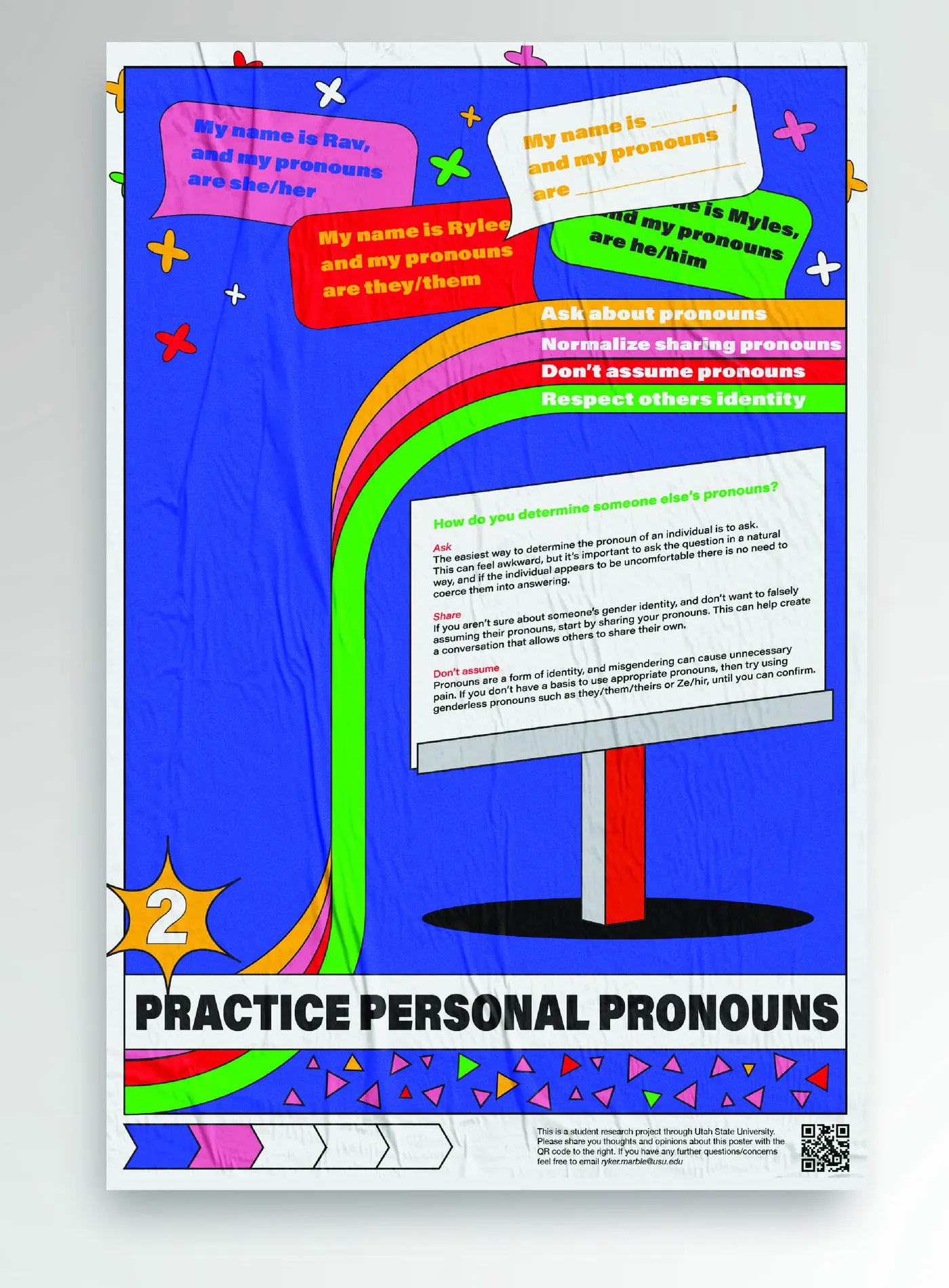
- How do you determine someone else’s pronouns?
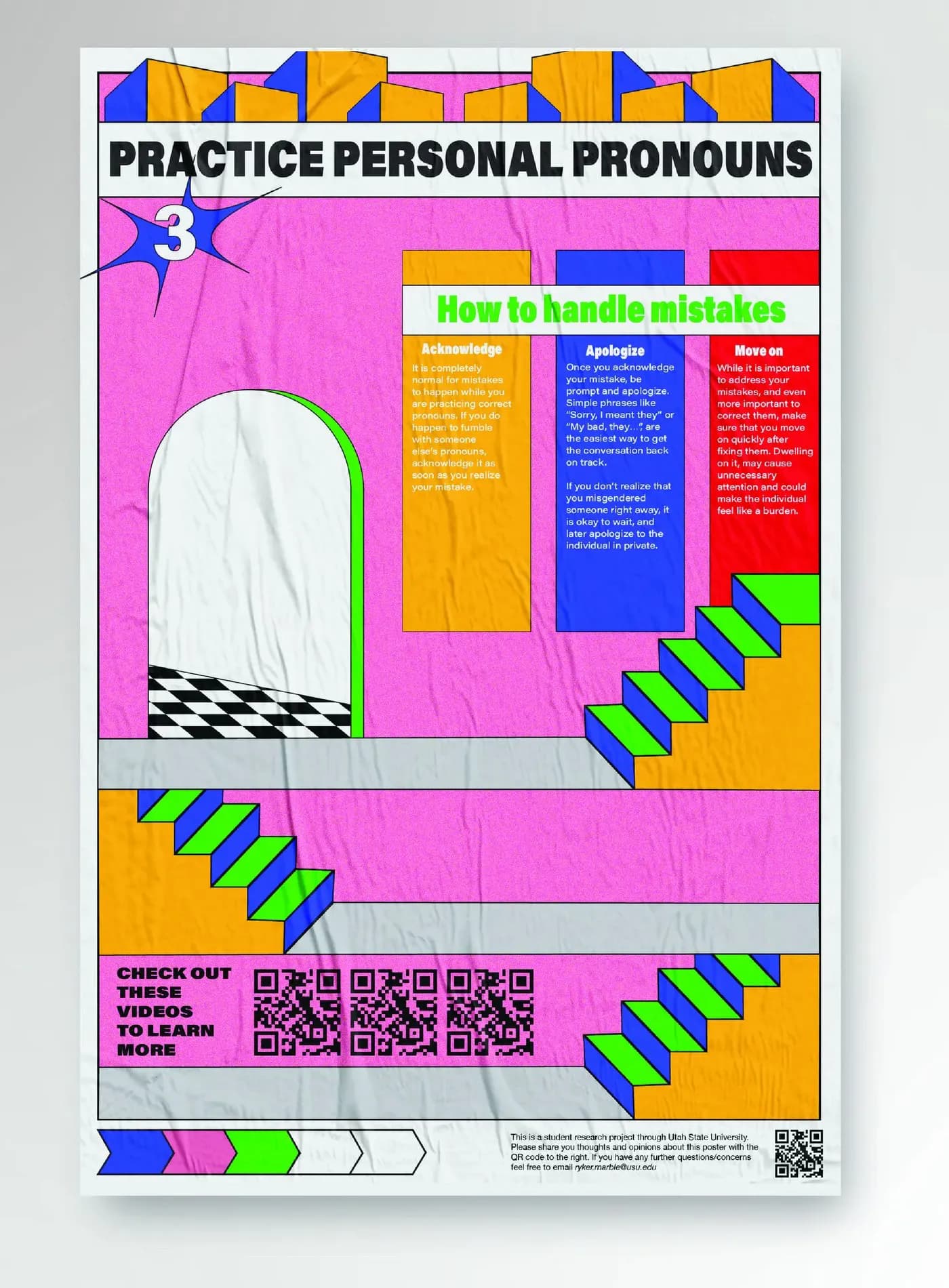
- How to handle mistakes, because everyone makes them.
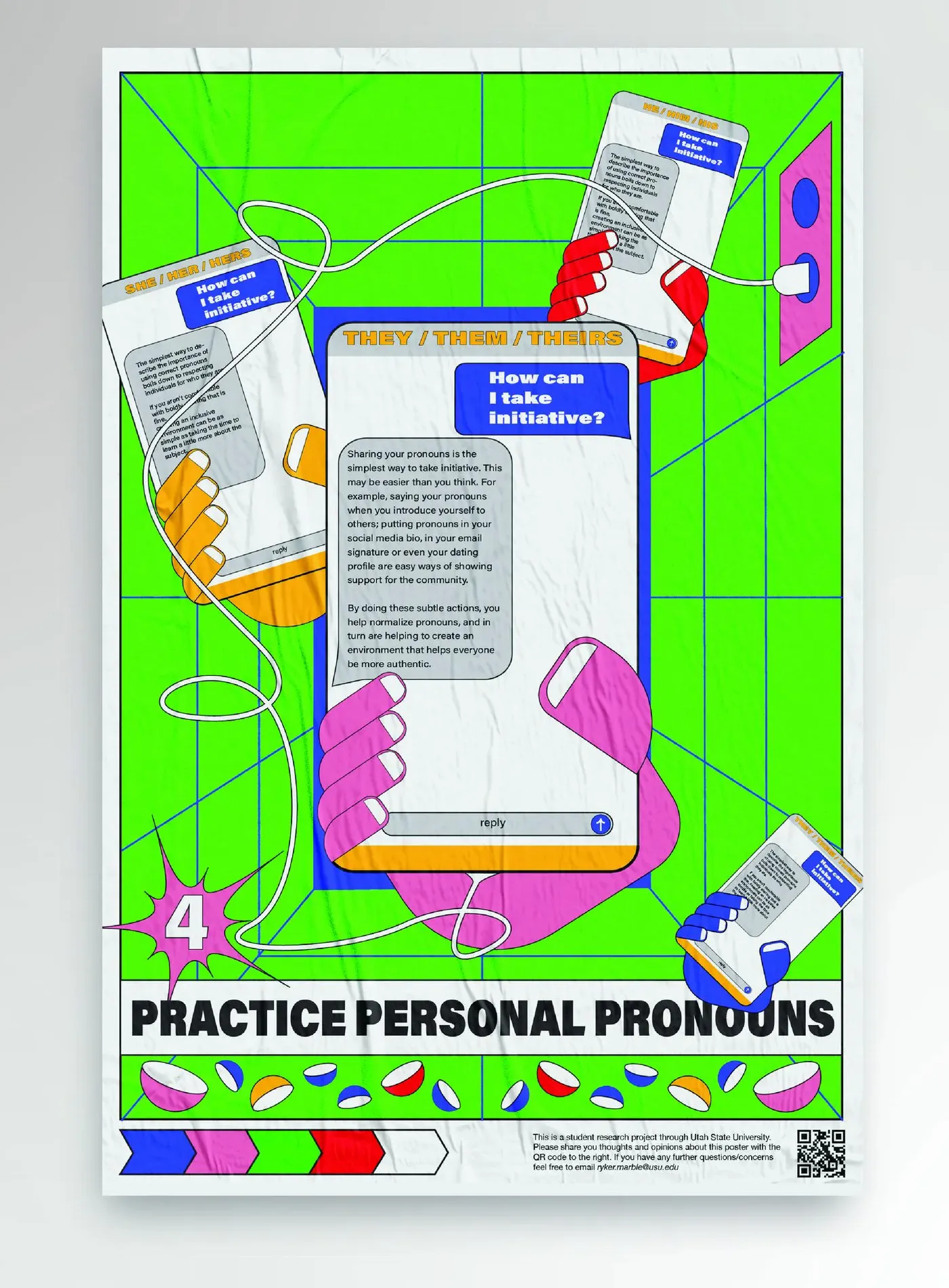
- How can I take initiative?
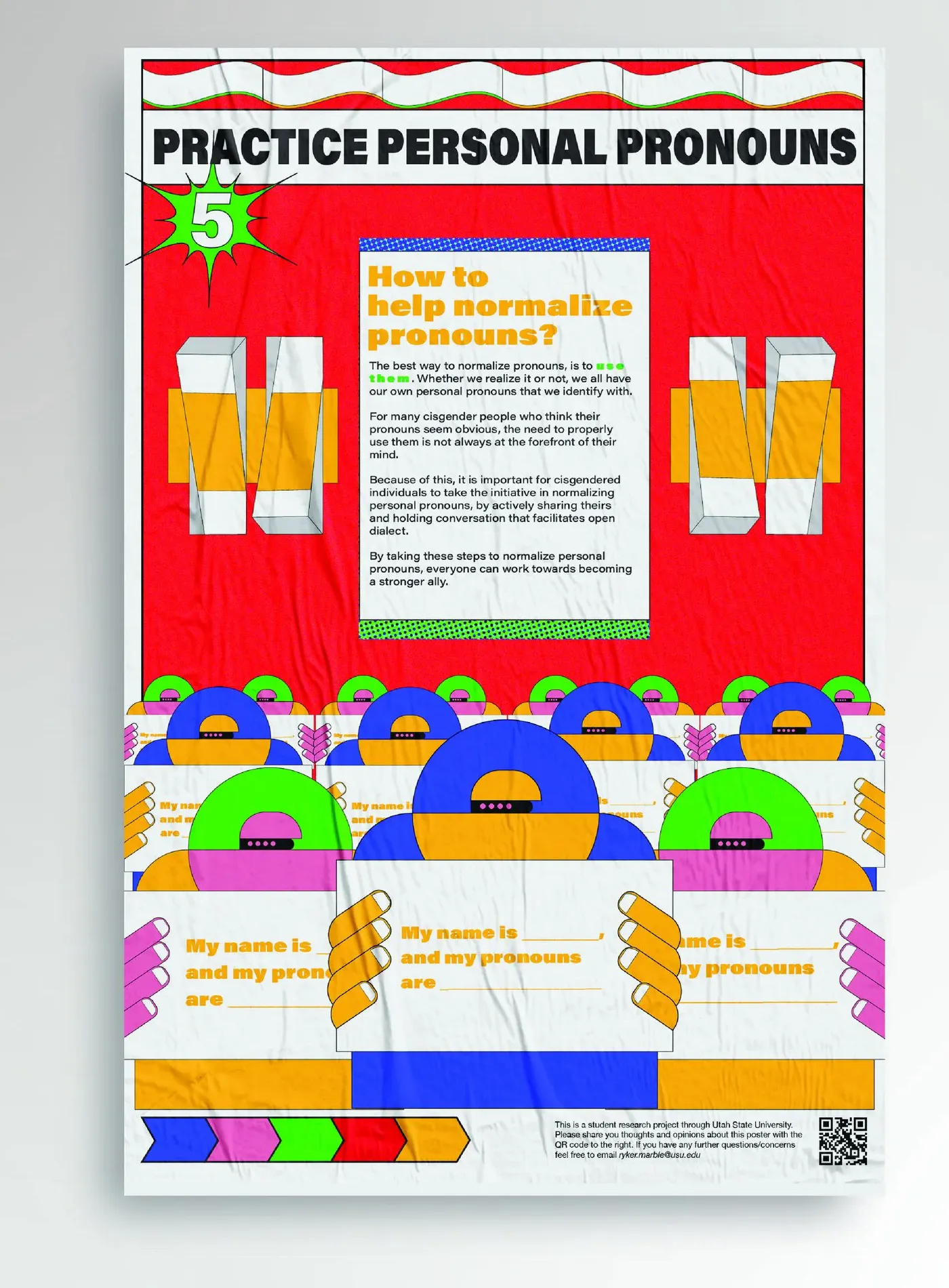
- How to help normalize pronouns.
They’re numbered so they read in order on a wall, but each one also works on its own. QR codes on the posters link to short videos for anyone who wants to learn more.
The approach
Pronouns can be a tense subject, and a poster full of rules would have made people feel lectured. So I went the other way: loud color, impossible staircases, arches, cursors and smiley faces. The posters look like a game, which makes them easier to walk up to.
Underneath the play, the structure stays strict. Every poster has the same header and footer, one big question and short blocks of text, so the series reads as a set from across the room.
The last poster ends with a row of name tags: “My name is… and my pronouns are…” It sums up the series in one line and gives people something to actually practice.